5 Signs Your Machine Shop Is Overspending on Cutting Tools (And What to Do About It)
- Home
- /
- 5 Signs Your Machine Shop Is Overspending on Cutting Tools (And What to Do About It)
Here’s a conversation that happens in machine shops more often than anyone likes to admit: the production manager pulls up last quarter’s tooling spend, looks at the numbers, and says, “We need to cut this.” The procurement team pushes back on prices. The operators say the tools aren’t lasting. And nobody can quite figure out where the money is actually going.
The problem is rarely the price of the tools. It’s usually how they’re being used — or more precisely, how they’re being wasted.
Here are five signs your shop is overspending on cutting tools, and what actually fixes each one.
1. You’re Changing Inserts on Schedule, Not on Condition
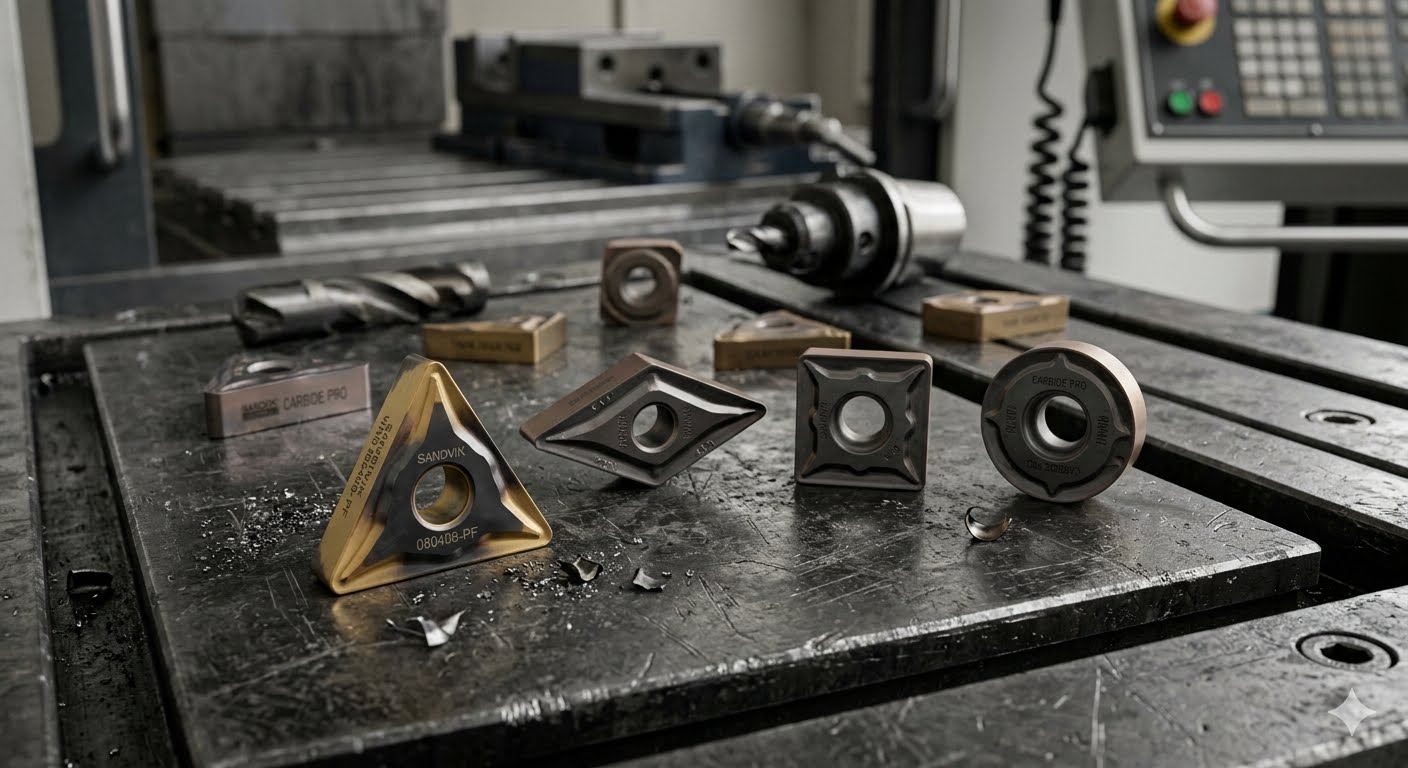
This is the single most common source of tooling waste in Indian machine shops. Someone decided — at some point in the past — that inserts should be changed every X hours or every Y parts. That number gets baked into the production process and nobody questions it.
The problem: that number was probably set conservatively to avoid failures. So inserts are being discarded with usable life remaining.
What to do: Switch to condition-based tool change. Train operators to recognise the actual signs of tool wear — changes in surface finish, increased cutting forces, sound changes. Use all available cutting edges on indexable inserts before disposal. A four-edged insert changed after two edges is 50% wasted spend, every time.
2. Your Scrap Rate Spikes at the End of Tool Life
If your scrap or rework rate climbs predictably just before a tool change would normally happen, that’s not a quality problem — it’s a tooling management problem.
It usually means one of two things: either the tool life is set too long, or the tool grade or geometry is wrong for the material, causing accelerated and unpredictable wear.
What to do: Track scrap rate against tool age. If there’s a correlation, tighten your tool change interval. The cost of a scrapped part almost always exceeds the residual value of the insert. Also review whether your insert grade is correctly matched to your workpiece material — the wrong grade wears unevenly.
Our team at Jaypee Associates can help specify the right insert grade for your material — get in touch if you’re seeing this pattern.
3. You Have No Idea How Many Tools Are on the Shop Floor
Walk into the tool crib of a shop that’s overspending and you’ll often find the same thing: duplicate stock, partially used insert boxes, tools checked out and never returned, and nobody with a clear picture of what’s in use versus sitting in a drawer.
Uncontrolled tool inventory is invisible spend. You keep ordering because you can’t find what you already have.
What to do: Implement basic tool management — even a spreadsheet is better than nothing. Know how many of each insert type are on hand. Set reorder points based on actual consumption rates, not gut feel. Shops that control this well typically operate with 30–40% less tooling inventory while never running short.
4. You’re Using Premium Tools for Operations That Don’t Need Them
Premium cutting tools are genuinely worth the cost when the operation demands them — finishing aerospace components, running at high speeds on a modern machining centre. But the same premium insert on a simple facing operation on mild steel at conservative parameters? That’s money going into a bin that a standard grade would handle equally well.
What to do: Segment your tooling by operation type. Use economy or mid-range grades for roughing and general work. Reserve premium grades for finishing, tight-tolerance work, and difficult materials. Browse our product categories — there’s a significant price difference between grades, and matching grade to application is one of the fastest ways to reduce tooling spend without touching output quality.
5. Your Operators Don’t Have the Information They Need
This one is less obvious but often the root cause of everything above. When operators don’t know the recommended cutting parameters for a tool, they default to whatever worked last time or whatever feels safe. That usually means running too slow (wasting capacity and generating heat) or too fast (burning through tools).
What to do: Provide cutting data at the machine. Manufacturers provide detailed parameter recommendations for every tool — use them as a starting point, then optimise. When you’re buying from an authorised distributor rather than a grey-market supplier, you also get access to proper technical support. That access is part of what you’re paying for.
The Underlying Pattern
Every one of these issues has the same structure: a small decision made without full information, repeated thousands of times, compounding into significant spend. Fixing tooling costs isn’t usually about buying cheaper tools — it’s about using the right tools, correctly, with proper visibility into what’s happening on the floor.
If you’re working through a tooling efficiency review and want a second opinion on your current setup, reach out to us. As authorised distributors for leading CNC tooling brands in India, we work with shops of all sizes to find the right balance between performance and cost.
Table Of Contents
Recent Posts
5-Axis CNC Machining: How Advanced Tooling and Workholding Improve Precision?
30 Sep 2026
CNC Workholding Systems Market in 2026: Size, Trends & Future Growth
29 Sep 2026
Lights-Out CNC Machining: How Automated Workholding Enables Unattended Production?
28 Sep 2026
5 Reasons Your Fixture Is Not Delivering Consistent Results
17 Sep 2026