5-Axis CNC Machining: How Advanced Tooling and Workholding Improve Precision?
- Home
- /
- 5-Axis CNC Machining: How Advanced Tooling and Workholding Improve Precision?
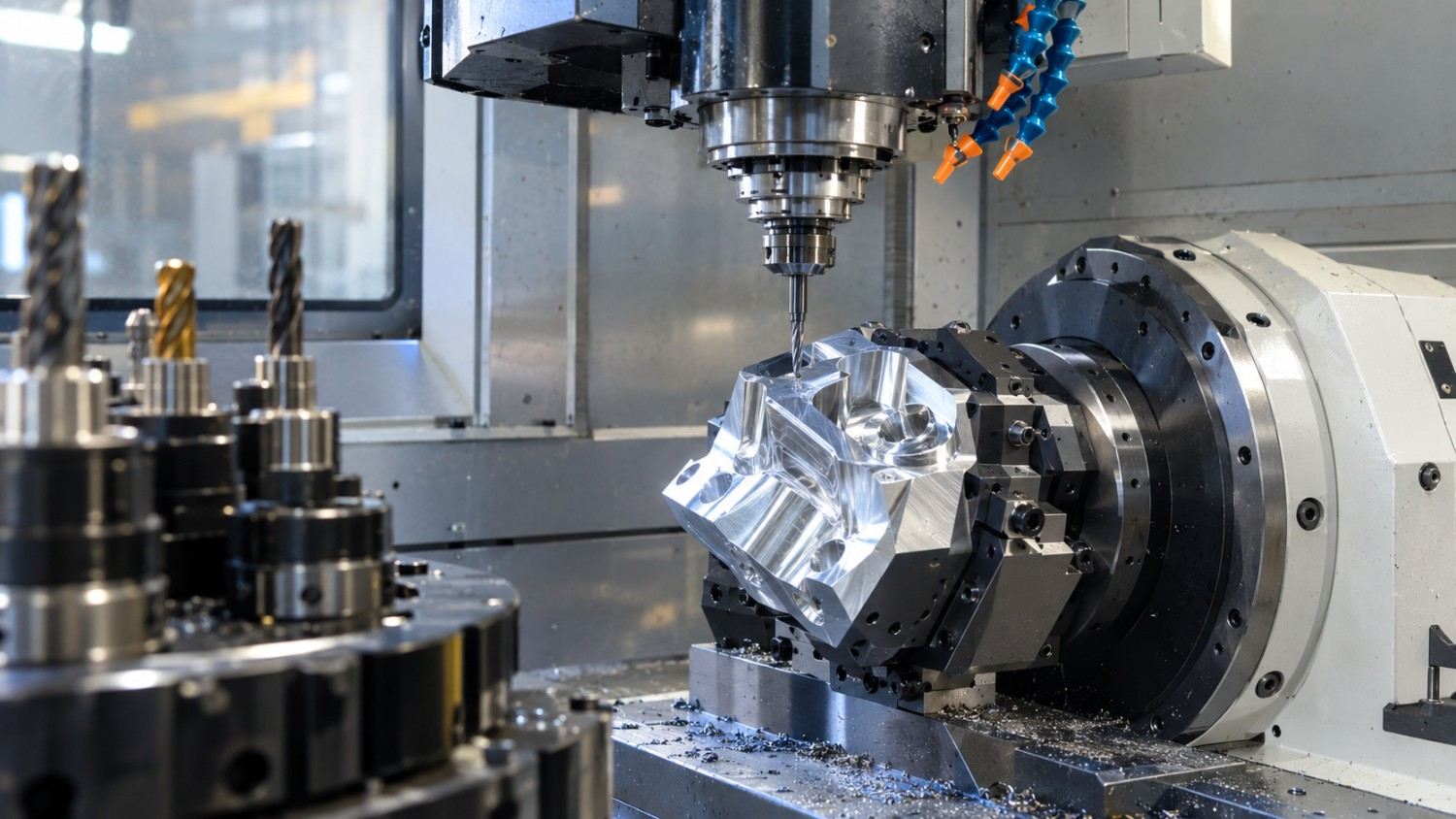
5-axis CNC machining is very important for the manufacturing process. It helps manufacturers to approach a component from various directions as well as maintain more control over the cutting process. However, it is not possible to ensure precision only with the capabilities of a 5-axis machine. Specialised workholding and advanced tooling also play a vital role by supporting continuous multi-surface contact, shorter tool overhangs and rigid positioning within a single setup.
All these technologies work together to improve surface quality, cutting stability and dimensional consistency. Get a complete idea about how advanced tooling and workholding improve precision during the manufacturing processes.
Advanced Tooling Minimizes Tool Deflection and Vibration
5-axis machining is highly advantageous because it can help to tilt the spindle toward the workpiece. Due to this flexibility, shorter cutting tools with less overhang can be used.
Generally, there is more stiffness while using shorter tools as compared to longer, more flexible tools. When the distance between the tool holder and cutting area is reduced during the cutting process, 5-axis positioning can minimize tool deflection and vibration significantly. This is especially essential while machining complex contours – where it is essential to maintain a stable cutting process.
Barrel-Shaped Tools Ensure More Consistent Finishing
When it comes to advanced 5-axis machining, barrel-shaped tools and high-flute cutting tools can be regarded as another important development. These have a large contact radius. Manufacturers can use larger stepovers. At the same time, they can still achieve fine surface finishes.
While machining contoured profiles, this can be an extremely useful approach. When a broad, controlled contact area is maintained, such kinds of tools can help to reduce blending errors that may otherwise become visible when adjacent machining passes meet. Due to this reason, even across complex surfaces, it is possible to get more consistent finishing.
5-Axis Machining Helps to Optimise Constant Tool Orientation
This is actually possible with 5-axis machining. There is no need to rely only on the tool tip for cutting activities. Along the tool face, the machine is able to maintain the desired contact point.
When a suitable part of the tool is used for cutting activities, it can improve stability while cutting. The tool can also be used for much more time. Naturally, while machining complex geometries, it is essential to maintain constant orientation control, to achieve consistent results.
Advanced Workholding Helps to Avoid Cumulative Alignment Errors
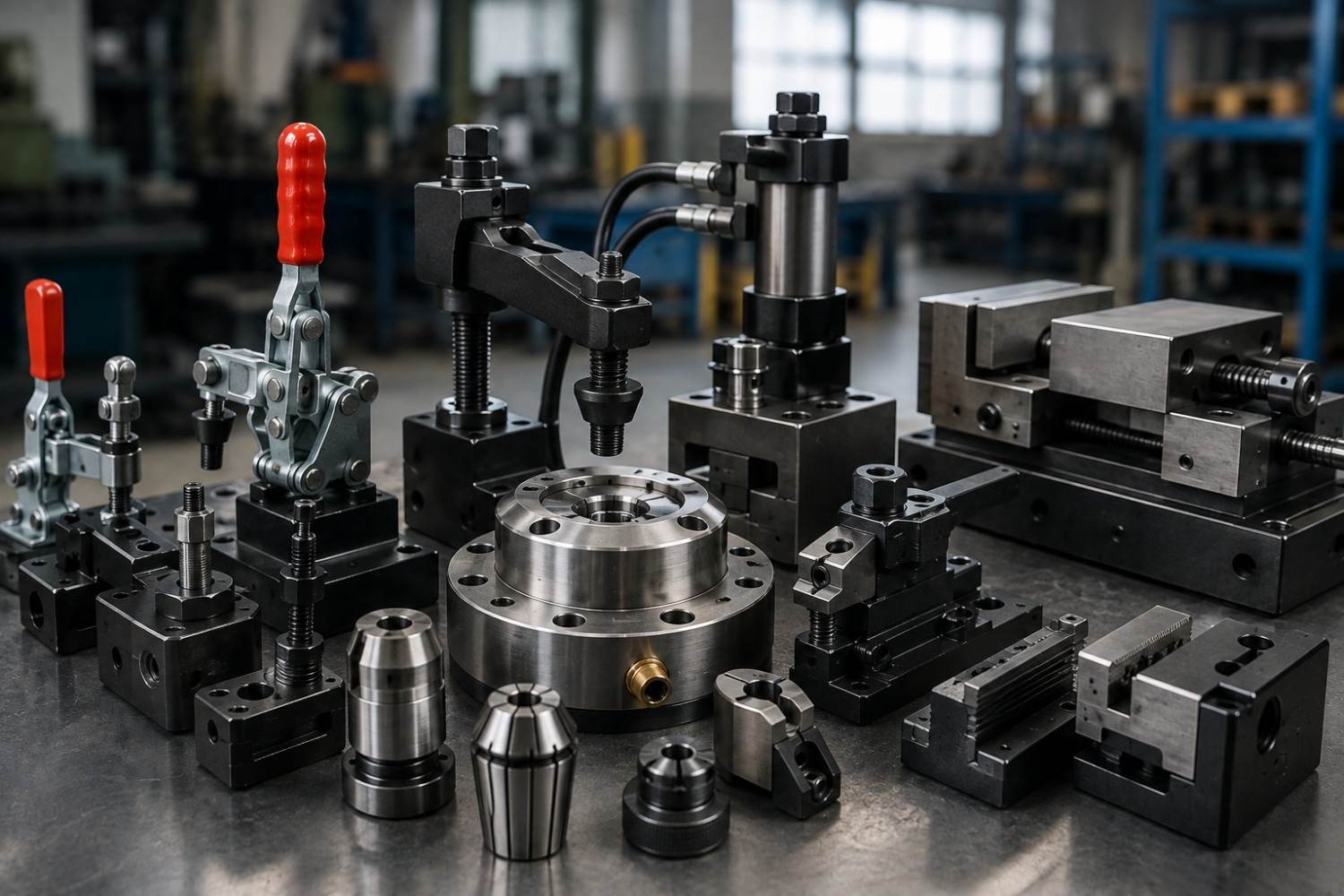
Tooling is only a part of the process when it comes to maintaining precision. It is also necessary to position the workpiece accurately throughout the machining process. This can easily be achieved with specialised workholding systems. It can ensure rigid, repeatable component positioning.
Single-setup machining is another important advantage. A 5-axis machine can reach multiple surfaces. There is no need for an operator to reposition the workpiece manually between operations.
Modular and Zero-point Workholding Systems
These are another effective way to improve repeatability. Such types of systems help to keep components secure in consistent positions, with the help of repeatable locking features and standardised pull studs.
Repeatable positioning can be very useful for complex geometries. These can help to maintain uniform clamping force and orientation across setups. It makes specialized workholding especially useful when there is a need for consistent machining conditions.
Low-Profile Vises and Trunnion-Mounted Fixtures
These help to reduce clearance interference. Clamping components are kept away from the working path of the spindle. These allow more access to various challenging features such as deep pockets and complex angles.
In 5-axis CNC machining, machine-axis movement is not the only thing that determines accuracy. Advanced tools and specialised workholding are equally important. Manufacturers can benefit from these two elements to use 5-axis machining in a better way. It can help them to achieve accurate positioning, stable cutting and components with a superior finish.
Frequently Asked Questions
How does advanced tooling improve 5-axis CNC machining precision?
Advanced tooling reduces tool deflection and vibration, helping ensure stable cutting performance and improved dimensional accuracy.
Why are barrel-shaped tools useful in 5-axis machining?
Barrel-shaped tools provide a larger contact radius, allowing larger stepovers while helping maintain consistent surface finishes.
How does constant tool orientation improve machining results?
Constant tool orientation helps maintain a stable cutting contact point, which can improve tool life, machining consistency, and surface quality.
Table Of Contents
Recent Posts
CNC Workholding Systems Market in 2026: Size, Trends & Future Growth
29 Sep 2026
Lights-Out CNC Machining: How Automated Workholding Enables Unattended Production?
28 Sep 2026
5 Reasons Your Fixture Is Not Delivering Consistent Results
17 Sep 2026
Zero-Point Clamping vs Traditional Clamping Systems
15 Sep 2026