Zero-Point Clamping vs Traditional Clamping Systems
- Home
- /
- Zero-Point Clamping vs Traditional Clamping Systems
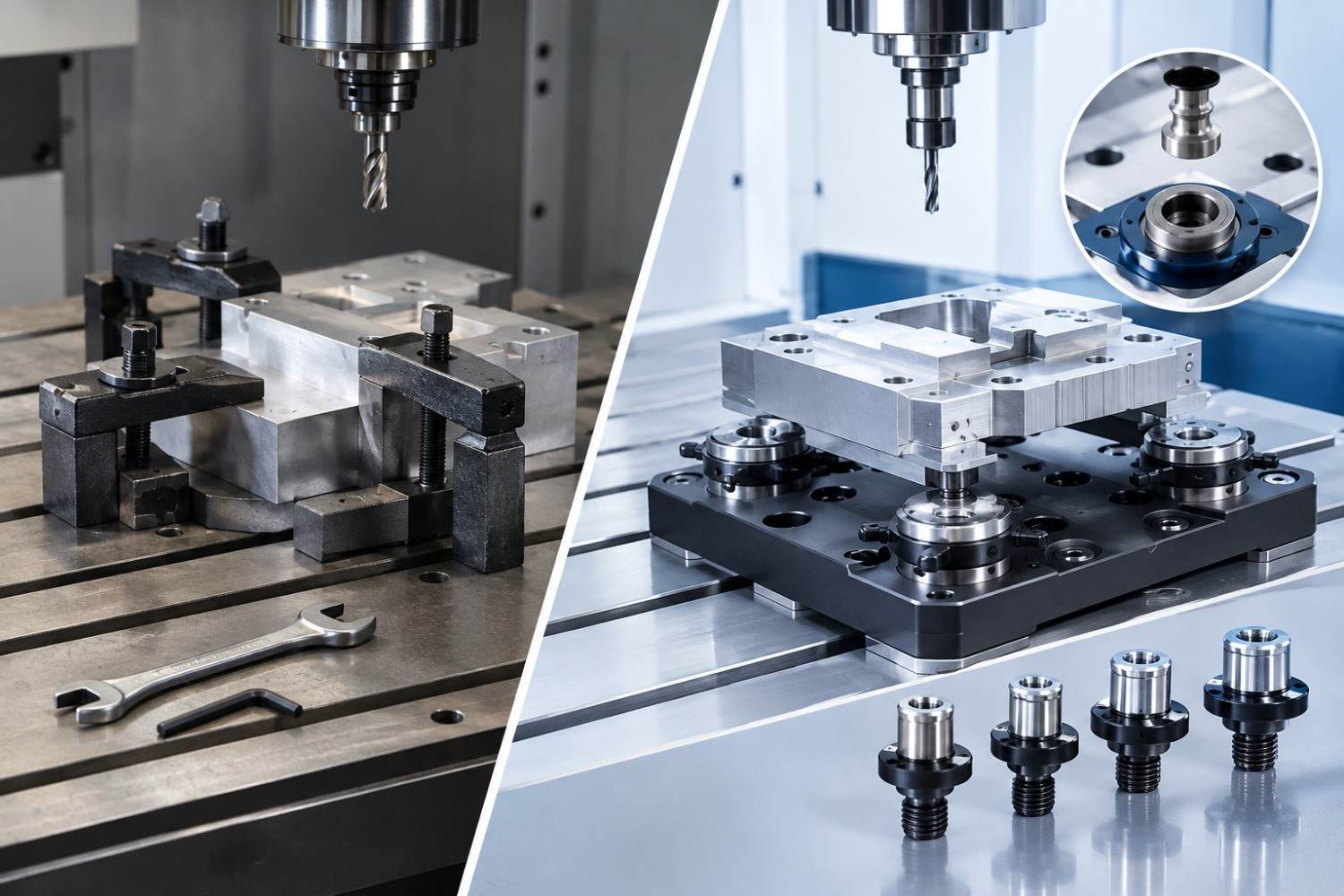
When it comes to modern machining, setup efficiency has a big role to play. It can directly impact the use of machine, accuracy and productivity. T-slots, vises and other regular clamping methods often need manual positioning, work-offset adjustments and alignment, even before machining starts. A zero-point clamping system uses standardized pull studs and a permanent physical reference point. Take a look at the top differences between zero-point clamping and traditional clamping systems.
Setup and Changeover Time
One of the biggest differences is the amount of time that is needed for making a machine ready for a new task. Typically, traditional clamping involves:
- Bolting fixtures to the table manually,
- Checking alignment and squareness, and
- Setting work offsets
These steps, based on the application, can take anywhere between 30 and 45 minutes. Zero-point clamping establishes a fixed reference position, simplifying this process. Pallets, fixtures or workholding devices that come with standardized pull studs can be placed and locked rapidly into place. Changes in fixture or pallet, in many applications, can be completed in less than a minute. Operators can get the chance to spend more time machining. They have to spend less time in preparing the machine.
Accuracy and Repeatability
Each time a fixture is set up in place or repositioned, manual clamping can introduce small variations in alignment. Even careful operators have to make measurements and adjustments repeatedly, to get the desired position.
Zero-point systems are designed around a consistent reference point. After the system is set up and calibrated properly, fixtures can go back to the same position very accurately. These can possibly reach 0.005 mm or less, based on the application and equipment. Due to this repeatability, setup-related errors can be reduced. There is better support for consistent machining results across various production runs.
Thermal Compensation
Changes in temperature can lead to another challenge in precision machining. There can be variations in regular setups, due to:
- Thermal expansion,
- Clearances, or
- Relationship changes between the machine table and workholding components
There can be radial springs, integrated cones and other engineered features in advanced zero-point chucks. With changes in temperatures, it is possible to maintain a centred reference point. Due to the design, there can be more stable positioning during demanding machining operations. It can reduce the impact of thermal variations on repeatability.
Automation and Lights-Out Production
In case of automated manufacturing, manually bolted fixtures and traditional T-slot tables are not always ideal. This is because changes in fixture usually rely on operator intervention. It can reduce the opportunities for unattended production.
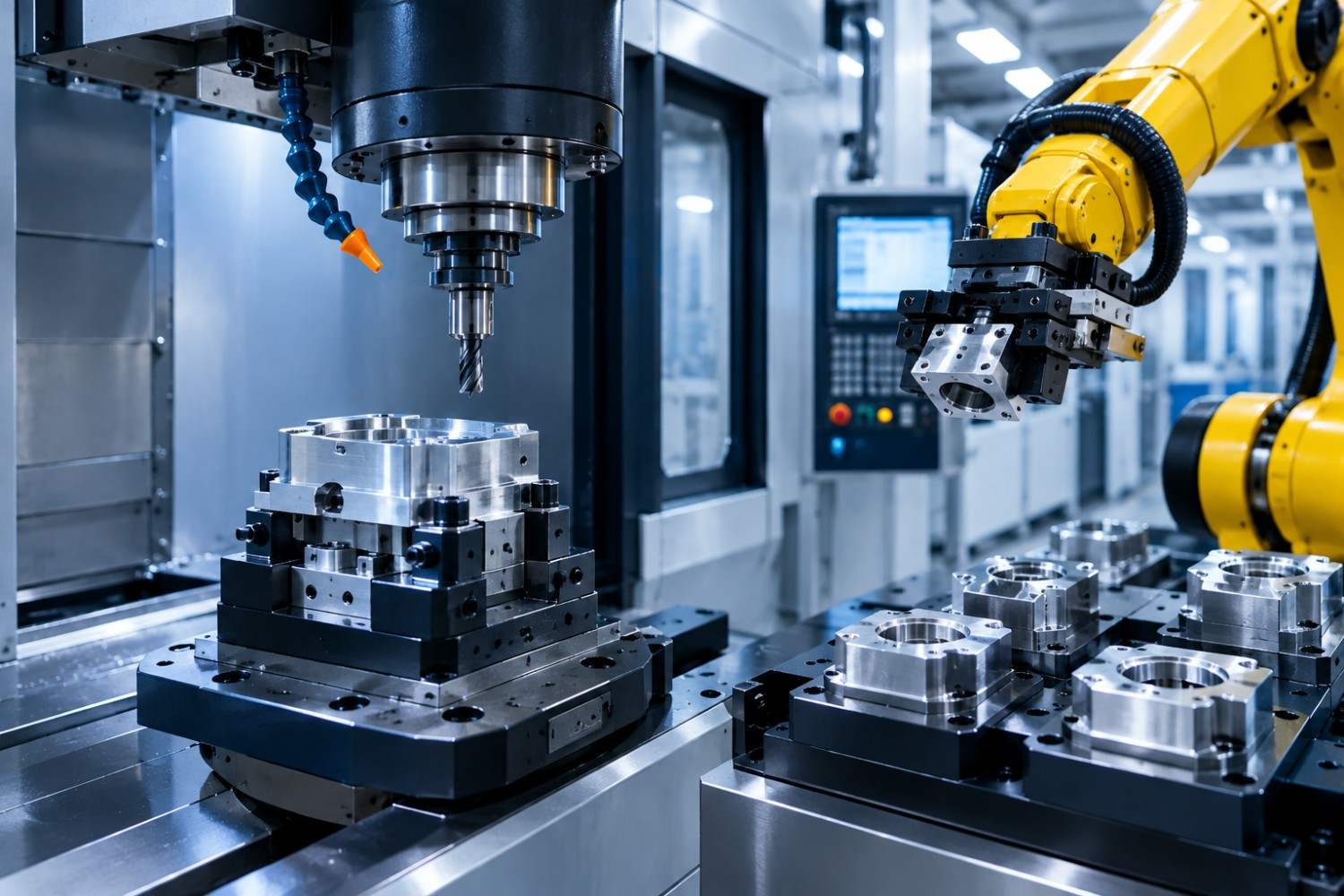
Zero-point clamping systems are designed to ensure automation. Rapid clamping and unclamping are possible with pneumatic actuation. However, robotic systems or automatic pallet changers can be used to exchange compatible pallets and fixtures. Due to this reason, zero-point technology is especially apt for lights-out manufacturing, where minimizing manual intervention is essential.
With manufacturers pursuing shorter production cycles and higher efficiency, zero-point clamping helps to transform machine setup in a powerful way. It can combine a permanent reference point with standardized pull studs, making machining operations much more productive.
Frequently Asked Questions
What is the main advantage of zero-point clamping over traditional clamping?
Zero-point clamping can significantly reduce setup and changeover time. It provides a fixed reference point, enabling rapid and repeatable fixture positioning.
How does zero-point clamping improve machining accuracy?
Zero-point clamping enables highly repeatable positioning. Depending on the equipment and application, advanced systems can achieve repeatability of 0.005 mm or less.
Can zero-point clamping help with thermal variations?
Yes. Advanced zero-point systems may use engineered features such as radial springs and integrated cones to help maintain stable positioning despite temperature variations.
Is zero-point clamping suitable for automated manufacturing?
Yes. Zero-point clamping is well-suited for automated and lights-out production, supporting applications such as automatic pallet changers, robotic systems and pneumatic actuation.
How quickly can fixtures be changed using a zero-point clamping system?
Compatible pallets, workholding devices or fixtures can be changed and securely locked into position in less than a minute, depending on the system and application.
Table Of Contents
Recent Posts
5-Axis CNC Machining: How Advanced Tooling and Workholding Improve Precision?
30 Sep 2026
CNC Workholding Systems Market in 2026: Size, Trends & Future Growth
29 Sep 2026
Lights-Out CNC Machining: How Automated Workholding Enables Unattended Production?
28 Sep 2026
5 Reasons Your Fixture Is Not Delivering Consistent Results
17 Sep 2026