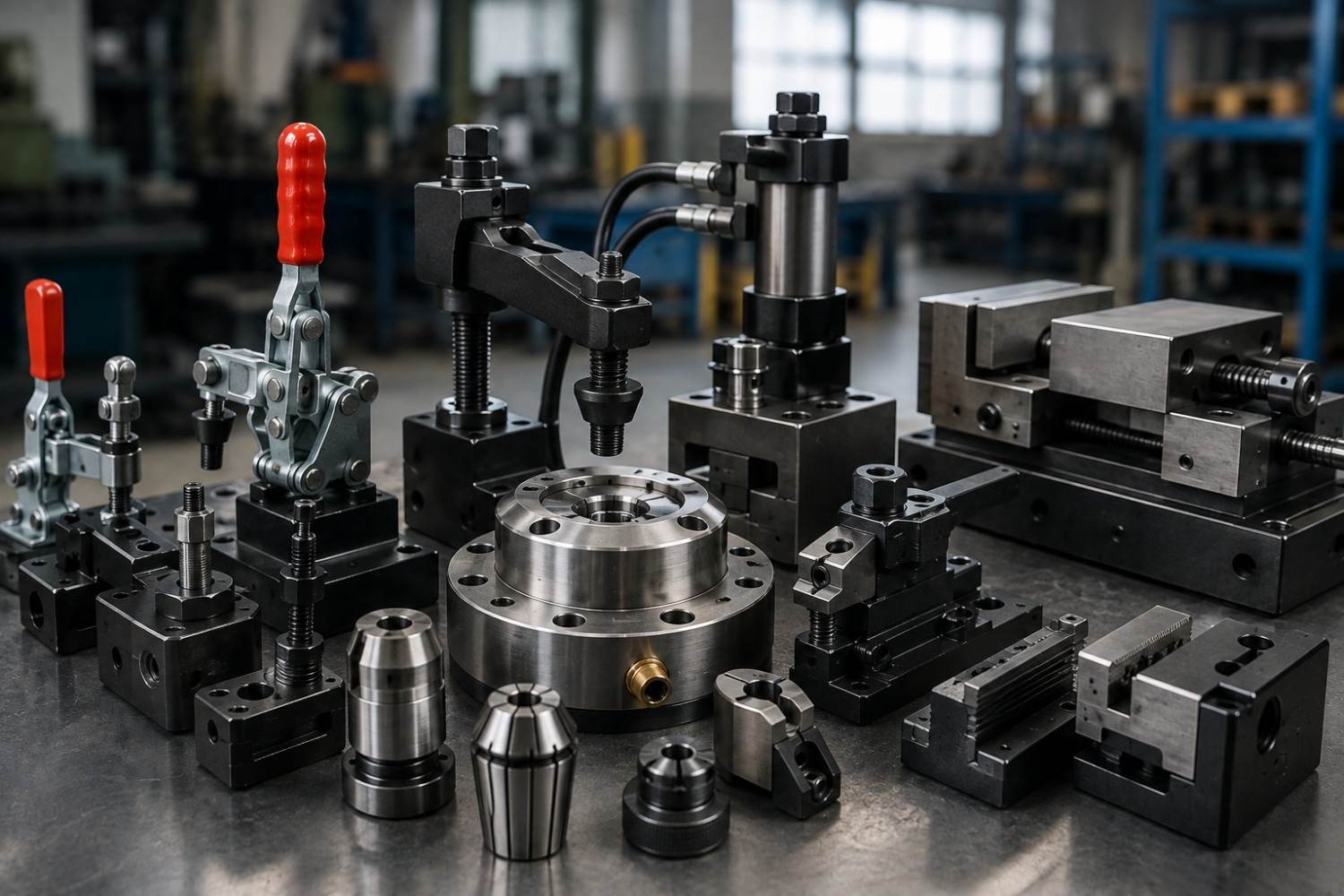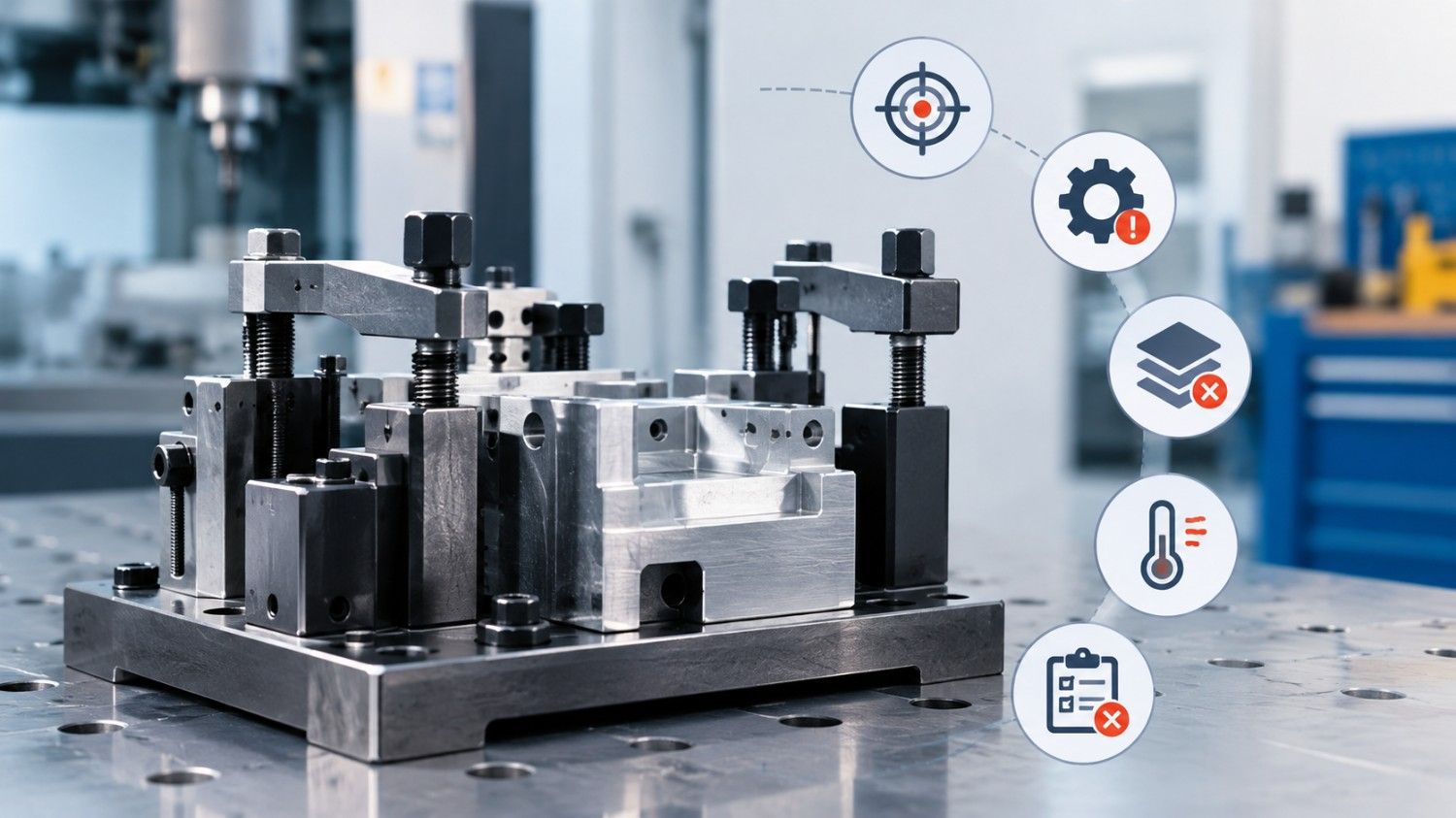
5 Reasons Your Fixture Is Not Delivering Consistent Results
- Home
- /
- 5 Reasons Your Fixture Is Not Delivering Consistent Results
Precision fixtures are necessary for machining, assembly, inspection and testing operations. When results are inconsistent due to a fixture, the problem may not always be obvious. Even minor changes in clamping, components, temperature etc can have a big impact on part positioning and measurements. When the root causes are identified quickly, it can help to prevent quality issues, unnecessary rework and production delays. Here are 5 reasons why your fixture may not be delivering the consistent results that you expect.
Wear and Tear of Components
Fixtures suffer from repetition in:
- Loading,
- Clamping, and
- Unloading
This can cause wear and tear naturally. Locating bushings, pins, contact surfaces and clamps can make their original geometry get lost, deformed or erode. Even if there is a fraction of a millimetre of wear, structural play can be introduced into the fixture. Such small movements may lead to inconsistent positioning and part misalignment. Measurements can also vary across production cycle.
Inadequate Clamping Force
Clamping force need to be controlled with care. If clamps are too close, it may allow shifting of a workpiece during inspection, testing or machining. But excessive force can be equally problematic. This is because it may deflect or deform the component. After the part gets released, it can spring back to some other shape, leading to inconsistent results.
Establishing repeatable clamping procedures is the solution. With torque-limiting wrenches, operators can exert consistent manual pressure. Hydraulic clamping or automated pneumatic systems can apply highly controlled force. Effective clamp placement is also necessary. It can ensure even pressure distribution across the workpiece.
Thermal Expansion and Contraction
Changes in temperature can affect precision applications significantly. Fixtures and workpieces can expand upon being heated and contract when these are cooled. When manufactured with varied materials, these can expand at varied rates.
For instance, a steel fixture that holds an aluminium component can experience differential thermal movement. This can alter critical dimensions and tolerances.
Debris and Contamination Build-Up
When you look at locating nests, contact points and banking surfaces, you can see the accumulation of:
- Metal chips,
- Dust,
- Oil, and
- Coolant residue
Such contaminants may not appear to be significant. However, even a small particle can prevent resting of a workpiece against its intended datums completely. It changes the orientation of the part. This can also have an impact on every machining operation or subsequent measurement.
Naturally, regular cleaning must be part of every production cycle. With air-blow systems, loose particles between cycles can be removed. Relief grooves can allow debris to escape rather than having them trapped beneath the workpiece.
Poor Part Tolerance and Operator Variability
At times, the problem is not with the fixture itself. Incoming components may have too much variation in dimensions. Various operators may load components in a different way. If an incorrectly positioned part is forced into a tight fixture, it can lead to internal stress. There can also be inconsistent outputs. This risk can be reduced with error-proofing. Incoming components should also be checked against required dimensional tolerances.
When all these issues are proactively addressed, it is possible to reduce variation and improve accuracy. Fixtures can be expected to perform reliably, throughout their service life.
Frequently Asked Questions
Why does fixture wear and tear cause inconsistent results?
Worn-out contact surfaces, clamps and pins can cause misalignment, unwanted movement and measurement variations, leading to inconsistent results.
How does clamping force affect fixture performance?
Incorrect clamping force can allow part movement or cause deformation, which may result in inconsistent machining or assembly outputs.
Can temperature changes affect fixture accuracy?
Yes. Thermal expansion and contraction can change fixture and part dimensions, potentially affecting critical tolerances and overall accuracy.
How can debris affect fixture consistency?
Dust, coolant residue, oil and machining chips can prevent proper part seating and interfere with fixture operation, resulting in inconsistent positioning.
How do part tolerances and operator handling affect fixture results?
Inconsistent loading, operator handling and dimensional variation can cause misalignment, internal stress and variable results across production cycles.
Table Of Contents
Recent Posts
5-Axis CNC Machining: How Advanced Tooling and Workholding Improve Precision?
30 Sep 2026
CNC Workholding Systems Market in 2026: Size, Trends & Future Growth
29 Sep 2026
Lights-Out CNC Machining: How Automated Workholding Enables Unattended Production?
28 Sep 2026
Zero-Point Clamping vs Traditional Clamping Systems
15 Sep 2026