Lights-Out CNC Machining: How Automated Workholding Enables Unattended Production?
- Home
- /
- Lights-Out CNC Machining: How Automated Workholding Enables Unattended Production?
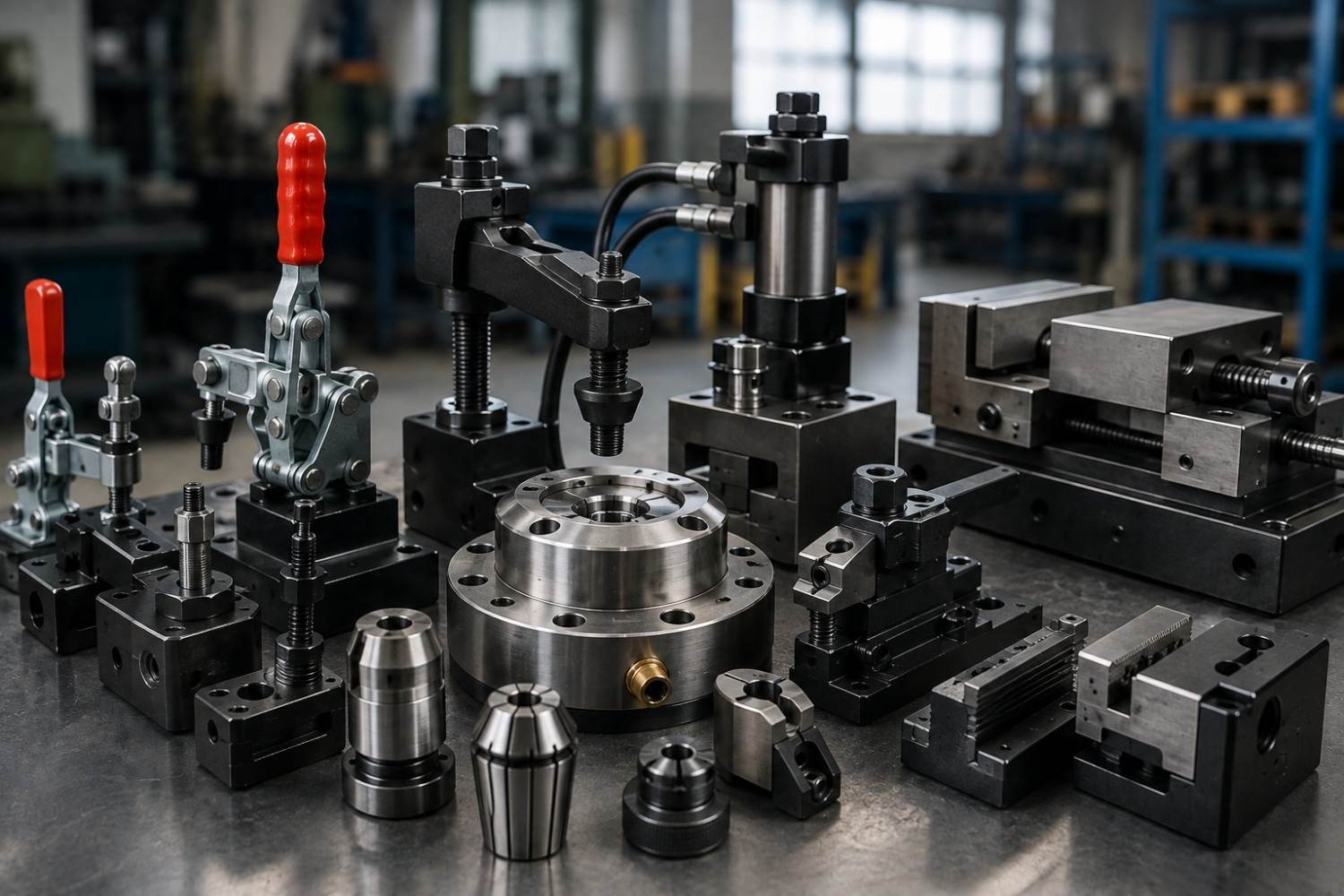
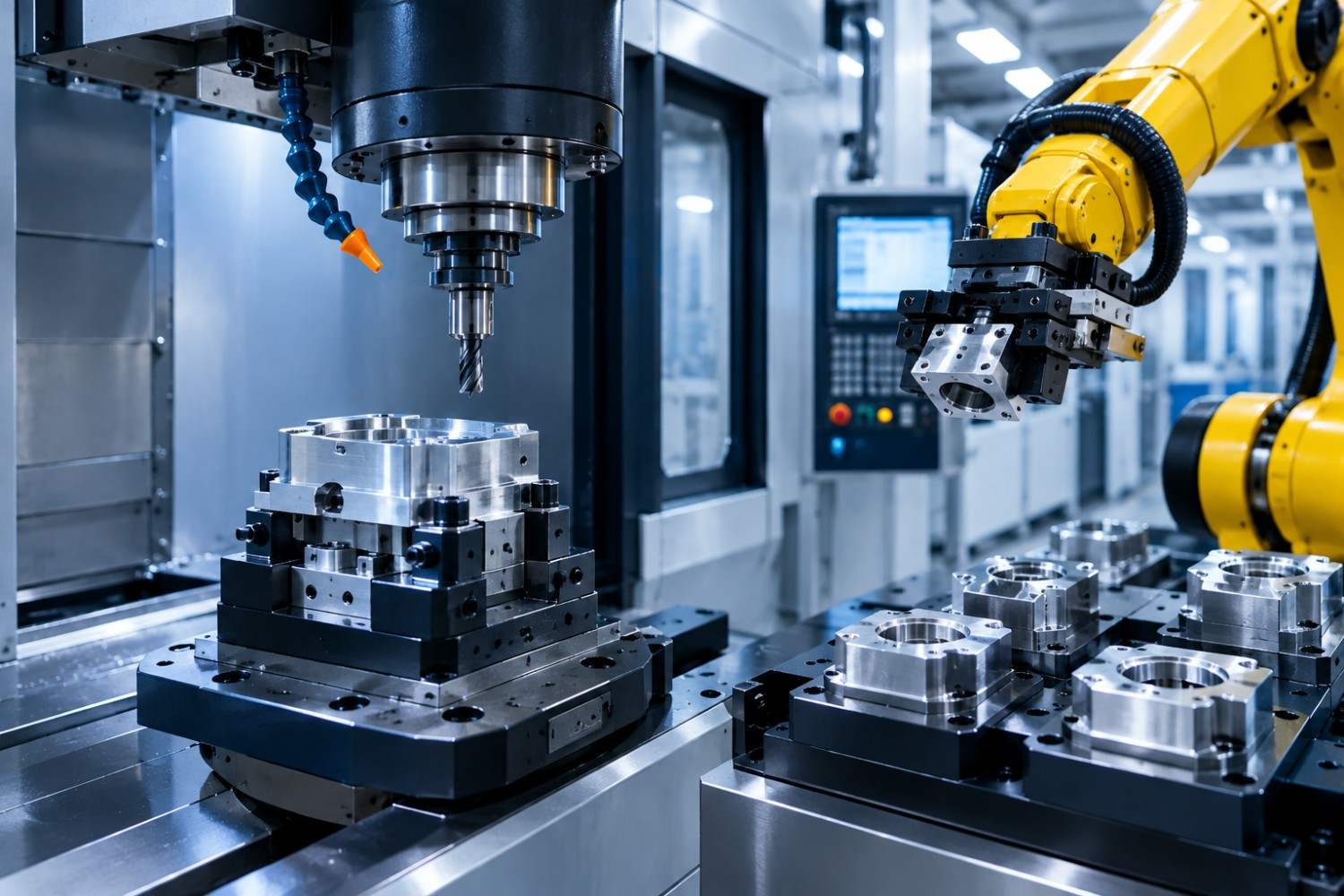
Lights-out CNC machining refers to manufacturing operations that need little or no human intervention. These include all those periods when there is no operator to manoeuvre these types of equipment. If this approach needs to work properly, there must be consistency in each stage of the machining process. Automated workholding plays a very important role in ensuring this. CNC Workholding & Clamping Systems Supplier India provides solutions that help maintain accurate positioning and constant, repeatable clamping force with no need for manual adjustments.
How Automated Workholding Makes Unattended Production Possible?
Automated workholding systems combine precise positioning, reliable clamping and designs that are appropriate for robotic handling. These features work together to help CNC machines maintain repeatable conditions for production processes that do not have any operator.
Use of zero-point systems, ensuring repeatable setups
Zero-point systems make use of quick-change modules. During each cycle, these help to locate pallets and fixtures at the same zero coordinate. Due to this repeatability, there is no need for someone to reposition workpieces manually between machining cycles.
Consistent positioning is especially necessary for automated production. This is because machining accuracy can be affected by even small variations in fixture location. Zero-point systems can offer a defined reference for automated loading and unloading.
Consistent clamping force for extended periods
All through the machining process, a workpiece must remain in a secure position. With the help of hydraulic, pneumatic and self-contained mechanical clamps, it is possible to get consistent clamping force for a longer duration. There is no need for manual intervention.
This is especially useful in case of lights-out production, where operators cannot check and readjust fixtures on a routine basis. When clamping is maintained in a stable way, it can keep raw stock securely positioned during machining.
Compatibility with robotic operations
Automated workholding also needs to work with robots smoothly. Components can incorporate clear orientation marks, lead-in chamfers and geometries designed around robotic grippers.
With the help of such features, robots can approach, grip, position and release workpieces in a more consistent manner. When there is more predictable physical interaction between robots and workholding, manufacturers can support automated loading and unloading cycles with more convenience.
Ensuring clear reference surfaces
Accurate seating of workpiece can be affected by metal chips and other debris. Sloped surfaces and upward-facing designs can help shed swarf instead of accumulating on vital reference faces.
When these surfaces are kept clear, workpieces can seat properly before machining begins. It can support repeatability throughout automated cycles.
What are the Most Important Technologies Needed for Reliable Lights-Out Machining?
While automated workholding is essential, unattended machining needs a number of supporting technologies for reliable operations. These include:
In-Process Probing
During the machining cycle, in-process probing can help to verify workpiece placement and measure features. This information can be used by the system for triggering automatic offsets, wherever needed.
It is possible to get an extra layer of process control in this way. The machine can identify variations in positioning or dimensions easily, with no need for an operator to take measurements manually.
Tool monitoring systems
In the course of time, cutting tools can get worn out or even break during the machining process. Such conditions can easily be detected by tool monitoring systems. The tool can be replaced and the machining cell can be stopped before there is any serious problem.
This monitoring capability can be very useful for unattended production. It can help to reduce the risks associated with machining cycle continuation after a tool becomes unsuitable for use.
Effective chip management
Work areas, sensors and robotic grippers can be affected by chip accumulation. Chips from critical areas can be cleared with the help of automated air blasts and high-pressure coolant.
Therefore, proper chip management supports machining as well as automation. It can keep sensors and handling equipment functional as well as clean.
All these elements can operate together as an integrated system. With the help of these things, it is possible for CNC machining to continue with minimal human intervention. It can also help to maintain the repeatability that is necessary for automated manufacturing.
Frequently Asked Questions
What is lights-out CNC machining?
Lights-out CNC machining is an automated production process designed to operate with little or no manual intervention, often allowing machining to continue during unattended periods.
How does automated workholding support unattended machining?
Automated workholding helps maintain consistent clamping force and accurate workpiece positioning, reducing the need for manual adjustments during machining.
Why are Zero-point systems useful for lights-out production?
Zero-point systems provide repeatable positioning, allowing fixtures and pallets to return to the same reference location during each machining cycle.
Table Of Contents
Recent Posts
5-Axis CNC Machining: How Advanced Tooling and Workholding Improve Precision?
30 Sep 2026
CNC Workholding Systems Market in 2026: Size, Trends & Future Growth
29 Sep 2026
5 Reasons Your Fixture Is Not Delivering Consistent Results
17 Sep 2026
Zero-Point Clamping vs Traditional Clamping Systems
15 Sep 2026